
Identify and interpret atmospheric phenomena

Presentation 13 in the Environment Event Week 2016
Length: 30 min
Author: Delia Arias Arnold (ZAMG)
The eruption of Holuhraun in August 2014, in central Iceland, is the country’s largest lava and gas eruption since the Lakagígar eruption in 1783. Although very little volcanic ash was produced, large quantities of SO2 were released into the atmosphere. Two models have been used to simulate the dispersion and transport of SO2 for this event, the Lagrangian particle dispersion model FLEXPART and the on-line coupled model WRF-Chem. Whereas in the FLEXPART calculations no anthropogenic emissions or aqueous-phase chemical reactions are considered, in the WRF-Chem calculations, both are fully included. The results of the simulations are evaluated against satellite (GOME2B and OMI) data, as well as ground based SO2 concentration data. The analysis is conducted on a data management platform, which is currently developed in the frame of the ESA-funded project TAMP “Technology and Atmospheric Mission Platform”: it provides comprehensive functionalities to visualize and numerically compare data from different sources (model, satellite and ground-measurements).
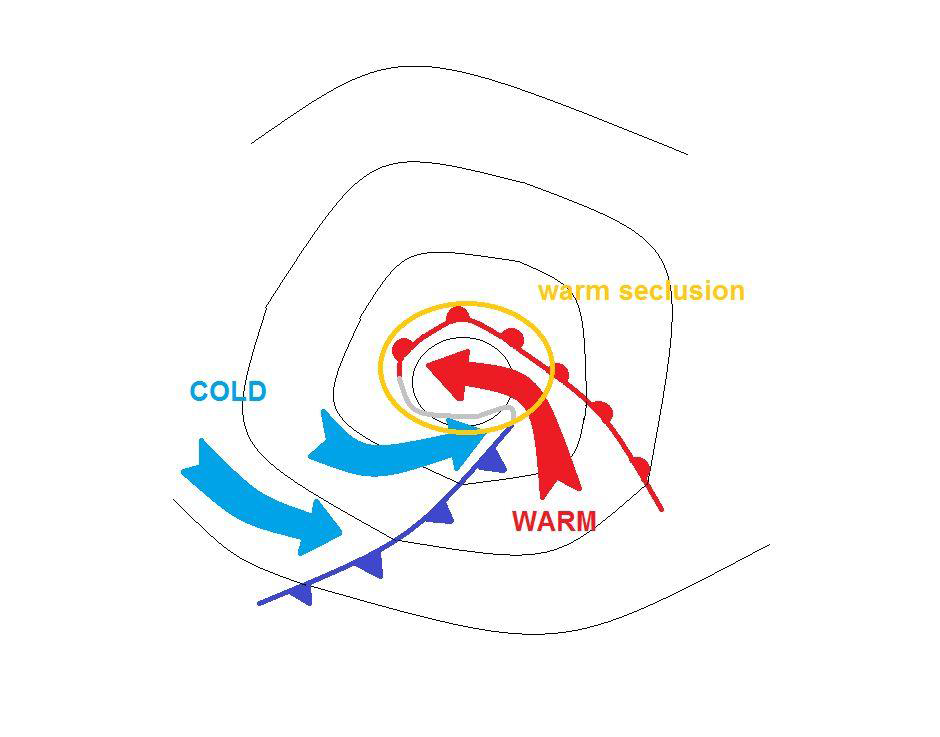
Andreas Wirth shows the main differences between the classical Norwegian cyclone model and the Shapiro-Keyser cyclone model.
Length: 110 minutes
In the frame of the 2020 SEEMET course, Andreas Wirth gave an overview talk on the two main mid-latitude low pressure systems: the classical Norwegian cyclone and the more recent Shapiro-Keyser cyclone. Both models were shown side by side and the main differences were pointed out. A real case example of both cyclone types illustrated the stages of the cyclones' life cycle. Finally, a quick overview was given on Sting Jets, a phenomenon that often accompanies Shapiro-Keyser cyclones.
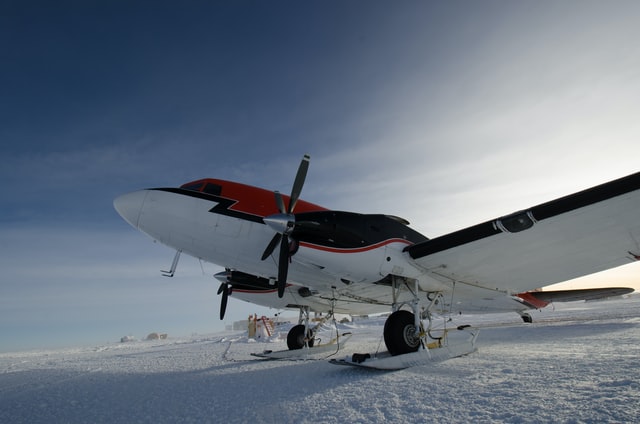
Roland Winkler talks about rules and regulations that are in place at airports to provide passenger security in harsh winter weather.
The weather still has a major impact on aviation today. Weather forecasts in aviation not only support safety, but also provide important input on the subject of economical air traffic. As part of this presentation, I would like to give a rough overview of how air traffic works in the cold season. I will speak about de- and anti-icing of aircraft and the snow removal in the airside area. Finally, I will show which meteorological products are created to support safe and economical air traffic.