
Climate
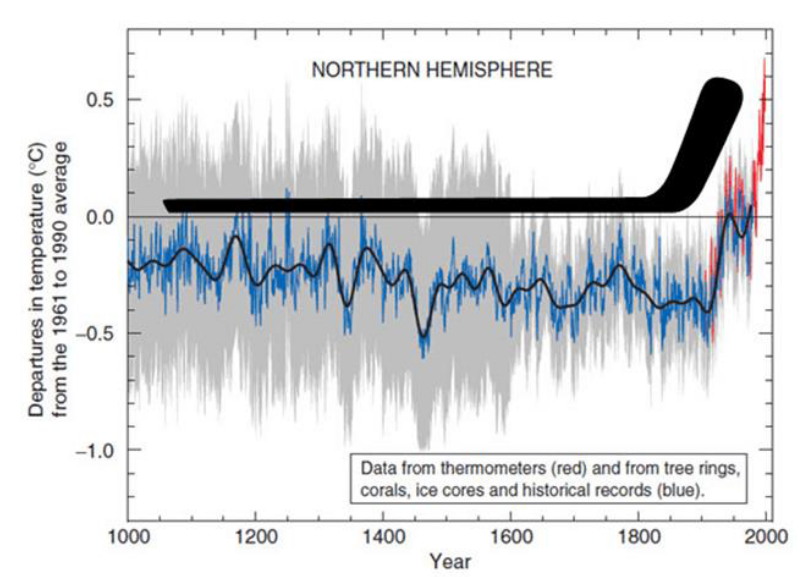
Lauryna Sidlauskaite talks about the challenges of winter road weather forecasts in view of climate change.
Length: 39 minutes.
Climate change is almost literally the "hot" topic of today. Scientists agree that cars with combustion engines are one of the main sources of greenhouse gasses, however, with such vastly growing world economy, transportation of goods and people is essential. Thus, certain measures must be and are being made to reduce their negative effect on climate.
Humanity has reached a point in time, when even if greenhouse gas emissions could be reduced to pre-industrial times it will not stop the human-induced climate change and the effects of it will be felt for decades or even centuries to come. Therefore, we’re compelled to know and understand what to expect from road weather, especially in winter seasons.
In this session, the problem of lack of specific climate forecasts for winter road weather will be discussed and future climate projections for road weather patterns will be presented with Lithuania as an example. The study in question involved regular climate forecasts for 21st century for several RCPs, downscaling of data to fit Lithuania and formation several statistical indices, that better describe road weather for road maintenance workers and road users. Using the indices allows a better understanding on what’s to come and how climate change will impact road weather in the 21st century.
Presentation 3 the Environment Event Week 2016
Length: 30 min
Author: Tommi Bergman (FMI)
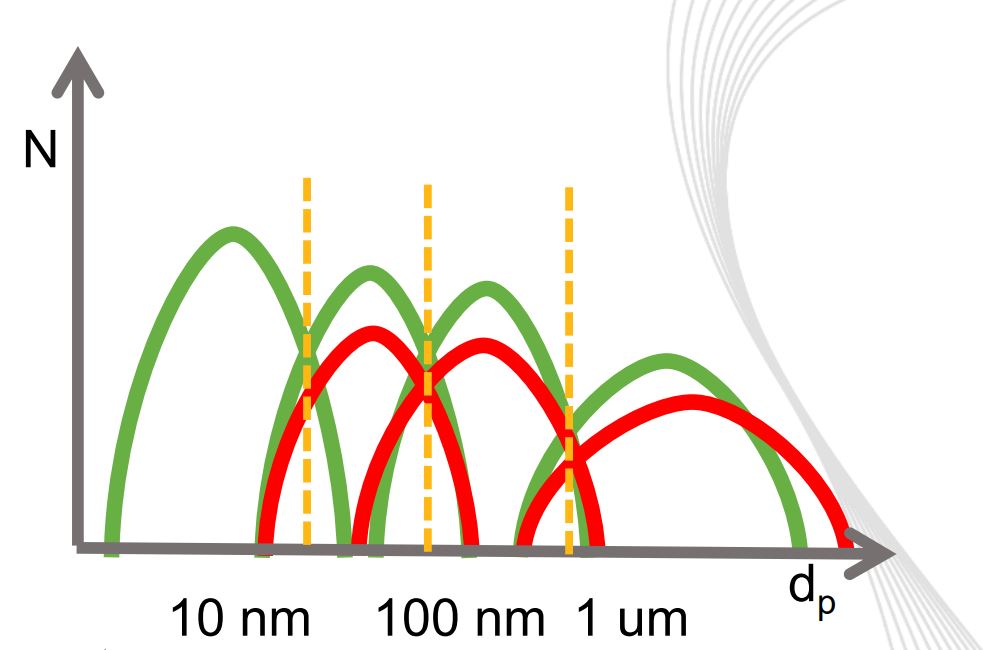
The aerosols have recently been incorporated into increasing number of global climate models. Aerosol models in global climate models are validated using variety of ground-based observations and satellite retrievals. Both data have their own advantages and disadvantages. For example, in-situ observations of particle size and composition give exact information on the aerosol distribution for small regions on the ground while satellite retrievals give a broader view on the global distribution of aerosols. In both cases the rather coarse spatial and temporal resolution of the global models increase the difficulty of using these data for their validation. I will demonstrate the limitations of the satellite retrievals and in-situ observations when comparing with models and demonstrate how, for example, collocation of the data can help to improve the match between models and observations.
Yulia Mishenina presents the results of studies of the characteristics of snow cover for the territories of Western and Eastern Siberia.
The report presents the results of studies of the characteristics of snow cover for the territories of Western and Eastern Siberia. The research period is from 1976 to 2020.
The report describes the duration of persistent snow cover, the time intervals between the first snowfall and stable snow cover and between the destruction and disappearance, a number of characteristics of the snow cover: duration of occurrence, thickness and water content.

Sven Kotlarski summarizes current research on the fate of surface snow cover and its implications for climate.
The presence of snow cover on the land surface is closely linked to the prevailing climate. Moreover, by modulating surface energy fluxes snow cover is interactively linked to the atmosphere and constitutes an important component of global and regional climate systems. Available observations show a retreat of snow cover on hemispheric scales as a response to global warming, and climate projections consistently indicate a further decrease. Focusing on Europe and especially on the European Alps, this contribution summarizes current research on the fate of surface snow cover and its implications.
Steinar Eastwood presents the OSI-SAF products and shows climatological applications of the data.
The sea ice products from the EUMETSAT Ocean and Sea Ice Satellite Application Facility are widely used. In this presentation the sea ice products will be presented and examples of use in operational numerical weather and ocean modelling will be given.